

On April 4 1922 Jack Corcoran promoted a boxing bout between Johnny Dundee and Jimmy Gooderich at the new Civic Arena on the Exhibition grounds. Corcoran was said to be a 'well-known west end sportsman' and wanted a big attraction for his debut as a boxing promoter after Toronto had beat out Buffalo and New York City for the bout.
It attracted the largest fight crowd of the season with over 8,000 to see Dundee beat Gooderich in 10 rounds.
In March 1923 Corcoran refereed at the Canadian Trials at Toronto's Gayety Theater alongside Lou Marsh and was picked to to go to Winnipeg to oversee the national bouts later in the month. Corcoran also reffed on his own early cards, often with Marsh as a ref or judge. Marsh was a noted and well respected sportsman and writer and frequently wrote the results column for the previous nights card. He was also an early supporter of Corcoran and they ran in the same circles, hunting and fishing together.
When Marsh died in March 1936 Corcoran related several anecdotes including crediting Marsh with saving him when their canoe turned over on a fishing trip. Marsh was so influential and respected that the Star devoted all of its cover and most of its first 4 pages to him upon his passing.
The Queensbury Athletic Club is formed in 1923 when Corcoran joins with local promoter Eddie Rudd to run additional cards around Toronto. They held bouts at the Coliseum with some problems early on with cancelled bouts and such, but came back with strong cards. Rudd had promoted as early as 1922 on his own, around the same time Corcoran had put on his first card. They went on to run cards at the Standard Theater at Dundas and Spadina in 1924 and there was a mention of 'less than 3,000' paid for 3 consecutive cards held in January, though that number doesn't seem too bad for a small venue.
 |
| 1922 Opener |
An item Feb 20 1924 looking at the upcoming Queensbury Boxing card mentions that Wrestling may be making a comeback in the city. Cards had been held at the Labor Temple with Jack Forbes, George Walker, and other notables of the day appearing.
In Nov 1924 the Ontario Athletic Commission -OAC -re-licensed the two clubs promoting boxing in the city, Corcoran's Queensbury AC and George Williams International AC. It was said that it was a vote of confidence that the two groups were bringing good cards to Toronto.
A Nov 4 1925 item has Corcoran buying the Tyndall Apartments on Tyndall Ave consisting of 12 suites in 2 buildings for a deal which included cash and an exchange of housing properties on Ossington Ave, Dovercourt Rd, Perth Ave, and Hillary Ave in amounts to $84,500. He also owned the namesake Queensbury Hotel on Scarlett Rd and Nealon House on King St.
A May 22 1930 item refers to Corcoran buying one of the 'Seagram Stable' horses at auction for $100. A horse owned by Corcoran a 'Rundall' placed 2nd in a race at Long Branch in June 1930 and another 'Fire Girl' placed first in the first race a week later. He added more and kept a presence in the sport for many years. Often the races at Thorncliffe track in Toronto were named for sporting and local personalities including the wrestling stars and Corcoran himself.
Due to the resurgence of Pro Wrestling in Toronto under promoter Ivan Mickailoff, on Nov 6 1930 Corcoran promoted his own first Wrestling show at Massey Hall. A write up prior suggested that with the principals on the scene nothing remains now for 'Corcoran to do but sit back and listen to the merry click of the turnstiles' of which would appear certain due to the large demand for tickets. It was added that 'despite the outstanding wrestlers in the main event, Corcoran has decided not to increase his prices and the same popular rates will prevail as at previous shows'.
The main event was to feature Jim Browning vs Jack Rough-house McCarthy said to be a former sparring partner of Jack Dempsey.
A review by the Star's Sports Editor W.A. Hewitt said that 'Corcoran was handed a lemon for his first show. 'Rough-House' McCarthy turned out to be such a poor performer that the Queensbury Athletic Club reported him to the Ontario Athletic Commission. The crowd razzed the wrestlers in a good-natured way, and Jim Browning, a real good grappler, was also a victim, though he made short work of McCarthy in a very business-like manner. The show lacked color and action. Promoter Corcoran should make amends in his next show by bringing along some top-notchers that the fans are acquainted with instead of 'unknowns' of the mat game.'
Lou Marsh wrote in his column that Corcoran was double-crossed and alleges one of the main bouters (McCarthy evidently) was 'Pie-eyed' and the OAC may fine Corcoran the purse amount. Marsh suggests that Corcoran will not be successful until he brings in a 'rival gang of equal strength to the crowd which is operating here now - a crowd which knows what is all about' and adds 'Corcoran might be well advised to stick to the boxing end' as he 'knows his boxers, and he has the confidence of the local boxing public'.
 |
| Nov 6 1930 |
In the recap the card was referred to as 'a thorough flop'.
Jim Browning over Jack McCarthey 2 falls
Joe Shimkus beat Jack Kogut
Chief War Eagle defeated Charles Monoogean
For that second show Corcoran set up John Pesek vs Joe Shimkus as the main. Pesek wins and in the other bouts Jim Browning returned to beat Alan Eustace, and Frank Wolfe beat Jack Krogut in the opener. Marsh in his column the next day suggested that Corcoran and Mickailoff get together and set up a Pesek-Sonnenberg (Sonnenberg appearing on Mickailoff cards) bout.
Pesek returns in December and Marsh plays up a rivalry between Corcoran and Mickailoff.
Maple Leaf Gardens, Londos, Mondt
On Oct 23 1931 Marsh writes that Corcoran is moving his show to the Coliseum for the nights card. That he 'is probably trying to get the boys used to the wide open spaces; for the shows Corcoran runs in the future are going to be at the new Maple Leaf Gardens.' He adds that the MLG people have a boxing license and have hooked up with Corcoran for the wrestling end.
 |
| with Playfair Brown |
The Oct 23 show draws over 7,000 to the Coliseum to see George Zaharias battle Mike Romano and Hewitt writes that 'when the Queensbury club stages its championship bout at the new Maple Leaf Gardens on Nov 19 a record wrestling crowd is likely to attend'. The 7,000 is to date one of the largest crowds to see pro wrestling in Toronto.
Corcoran brings in World champ Jim Londos for the Nov 5 card to introduce him to Toronto fans matching him with Romano. Romano is said to be runner up in the New York Tournament conducted to provide an opponent at Madison Square Garden for Londos and is sufficient indication as to the caliber of bout presented to fans here by the Queensbury club.
For the first MLG show on Nov 19 1931 reported attendance was 15,800 and Corcoran was off to a good start. Lou Marsh wrote that it brought in $13,000 from paid tickets as many more were invited guests. Another 2,000 more said to be outside unable to get in.
Marsh added that 'the brains of the Curley rasslin loop' Joe 'Toots' Mondt who wrestled Hans Bauer on the card was really there 'counting up the customers.' Mondt was in fact a partner in the Toronto office.
Mondt, a year later, stood trial locally on a manslaughter charge due to a car accident that killed a woman and Corcoran was called to testify. *1
In Jan 1932 Corcoran had added St Catharines to his loop and drew more than 1,600 on the 6th to the new stadium there to see Frankie Hart, Jack Kogut, Alex Kasaboski, and others. He also branched out to Niagara Falls, Hamilton, Brantford, and other towns around Southern Ontario for regular shows.
A Feb 29 1932 item has Corcoran just out of the shadows after a bout with 'Kid Pneumonia'. He had been ill for ten days and word was held back from the sporting public. It adds that Foster Hewitt, sports announcer and Andy Taylor building manager of MLG were also out with the flu. Another item says Corcoran was gone from the office for nearly 6 weeks.
Marsh added that 'the brains of the Curley rasslin loop' Joe 'Toots' Mondt who wrestled Hans Bauer on the card was really there 'counting up the customers.' Mondt was in fact a partner in the Toronto office.
Mondt, a year later, stood trial locally on a manslaughter charge due to a car accident that killed a woman and Corcoran was called to testify. *1
 |
| 1932 |
A Feb 29 1932 item has Corcoran just out of the shadows after a bout with 'Kid Pneumonia'. He had been ill for ten days and word was held back from the sporting public. It adds that Foster Hewitt, sports announcer and Andy Taylor building manager of MLG were also out with the flu. Another item says Corcoran was gone from the office for nearly 6 weeks.
Expanding, Savoldi, Bribery
In March 1933 Corcoran is promoting in Buffalo and Detroit. He also runs wrestling in Ottawa from 1932.
An Apr 12 1933 story says Corcoran 'who controls pro wrestling over the major portion of Canada' is after a contract with Jumping Joe Savoldi who had just pinned Jim Londos in Chicago to earn the claim as World Titlist. He ends up signing a 3 year deal said to be worth $100k.
Another item says it is Percy Gardiner doing the negotiating on brother-in-law Jack's behalf. Gardiner is noted to 'be financially behind the Queensbury AC man (Corcoran) since the beginning.' It goes on to say that it is likely that Gardiner is acting on behalf of the Bowser-Curley-Mondt interests in which Jack was a partner.
An item a year and a half later mentioned that at the time, everyone thought the man behind the money was 'screwy' to offer that much money. Savoldi, after beating Londos had passed that amount already just halfway into the 3 years making the deal a shrewd one.
In 1934 Corcoran made news as a part of the Ontario Athletic Commission bribery scandal. *2
In 1935 Corcoran published a 'Wrestling Guide' (right) featuring sketches by Lou Skuce whose work was a regular fixture in the Star and included drawings of the wrestlers with facts about their careers. The book/pamphlet type was sold at newsstands and turns up occasionally on e-bay.
In May 1937 Corcoran appeared before the OAC to settle a dispute with fellow Boxing Promoter Playfair Brown and agreed to work with his rival. Fellow rivals Jack Allen and Doc Cook were also present.
Close to death, the Tunney's, and a new lease on life
In March 1933 Corcoran is promoting in Buffalo and Detroit. He also runs wrestling in Ottawa from 1932.
An Apr 12 1933 story says Corcoran 'who controls pro wrestling over the major portion of Canada' is after a contract with Jumping Joe Savoldi who had just pinned Jim Londos in Chicago to earn the claim as World Titlist. He ends up signing a 3 year deal said to be worth $100k.
Another item says it is Percy Gardiner doing the negotiating on brother-in-law Jack's behalf. Gardiner is noted to 'be financially behind the Queensbury AC man (Corcoran) since the beginning.' It goes on to say that it is likely that Gardiner is acting on behalf of the Bowser-Curley-Mondt interests in which Jack was a partner.

An item a year and a half later mentioned that at the time, everyone thought the man behind the money was 'screwy' to offer that much money. Savoldi, after beating Londos had passed that amount already just halfway into the 3 years making the deal a shrewd one.
In 1934 Corcoran made news as a part of the Ontario Athletic Commission bribery scandal. *2
In 1935 Corcoran published a 'Wrestling Guide' (right) featuring sketches by Lou Skuce whose work was a regular fixture in the Star and included drawings of the wrestlers with facts about their careers. The book/pamphlet type was sold at newsstands and turns up occasionally on e-bay.
In May 1937 Corcoran appeared before the OAC to settle a dispute with fellow Boxing Promoter Playfair Brown and agreed to work with his rival. Fellow rivals Jack Allen and Doc Cook were also present.
Close to death, the Tunney's, and a new lease on life
Corcoran had another nasty battle with the flu in March 1939 taking some time off to recuperate in Florida. Mondt supervises the March 16 card featuring Londos vs Vic Christie and for the Mar 23 card John Tunney is said to be taking over matchmaking in the absence of Corcoran.
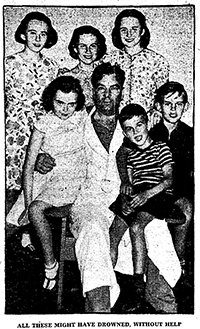
In July 1939 Corcoran and 8 others including 6 children and a dog escaped serious injury after their boat capsized in Lake Simcoe. They spent over 2 hours clinging to cushions waiting to be rescued, eventually by two teens and said to be in the nick of time. The story made the front page in Toronto.
Corcoran later received a bronze medal from the Royal Canadian Humane society presumably for saving the life of the dog. The original incident article made note of the fact that Jack blamed a lot of the distress on the flailing of the dog in the water, and that the dog almost cost them their lives. 20 years later in 1959 Corcoran reconvened those that were on the lake that day, the children now grown up, and gave them each $1000.
Its around this time (1939) Corcoran sells to the Tunney brothers. John Tunney was matchmaking and is now Promoter. His younger brother Frank, secretary of the Queensbury Club is listed as matchmaker and other partners include Paul Bowser, Jack Ganson, and Jerry Monahan.
Jack stays in the office handling some of the boxing but starts to retire away from the promotion. Frank takes over for his brother John when he dies suddenly in Jan 1940. Jack continued to be the Boxing Promoter through 1941 but by 1942 was retired from the office in an official sense. A 1943 charity mention referred to him as the 'Queensbury Hotel's Jack Corcoran'.
While later articles refer to the Tunney's taking over for an 'ailing Corcoran', Jack appears to have wanted to retire at that time. He left at a relatively young age and went on to spend another 25 years in the city. The severe bouts of the flu, the near death experience on the lake, and then the sudden passing of John later (from the flu) may have influenced his decision.
In 1941 Corcoran was receiving 5% of the gate from Tunney's shows. He is referred to in the late 1940's as 'retired from everything' and 'keeping a low profile.' When noted multi sport (including a short stint in pro wrestling) athlete Lionel Conacher died in 1954 Corcoran was one of the guards of honor at the funeral alongside Primo Carnera, Red Dutton (NHL Exec.), and others.
In July 1939 Corcoran and 8 others including 6 children and a dog escaped serious injury after their boat capsized in Lake Simcoe. They spent over 2 hours clinging to cushions waiting to be rescued, eventually by two teens and said to be in the nick of time. The story made the front page in Toronto.
 |
| 1939 Terror on the Lake |
Its around this time (1939) Corcoran sells to the Tunney brothers. John Tunney was matchmaking and is now Promoter. His younger brother Frank, secretary of the Queensbury Club is listed as matchmaker and other partners include Paul Bowser, Jack Ganson, and Jerry Monahan.
Jack stays in the office handling some of the boxing but starts to retire away from the promotion. Frank takes over for his brother John when he dies suddenly in Jan 1940. Jack continued to be the Boxing Promoter through 1941 but by 1942 was retired from the office in an official sense. A 1943 charity mention referred to him as the 'Queensbury Hotel's Jack Corcoran'.
While later articles refer to the Tunney's taking over for an 'ailing Corcoran', Jack appears to have wanted to retire at that time. He left at a relatively young age and went on to spend another 25 years in the city. The severe bouts of the flu, the near death experience on the lake, and then the sudden passing of John later (from the flu) may have influenced his decision.
In 1941 Corcoran was receiving 5% of the gate from Tunney's shows. He is referred to in the late 1940's as 'retired from everything' and 'keeping a low profile.' When noted multi sport (including a short stint in pro wrestling) athlete Lionel Conacher died in 1954 Corcoran was one of the guards of honor at the funeral alongside Primo Carnera, Red Dutton (NHL Exec.), and others.
In Dec 1957 the entertainment section reports that Corcoran a 'great-hearted Irishman who himself has done more for humanity in this time than many a group, was this week dragged out of mothballs (he's retired from even seeing his friends, it seems) and asked to talk about the infamous Red Ryan'. It goes on to describe a TV interview with Jack about the infamous bank robber and one time wrestler Ryan. *3
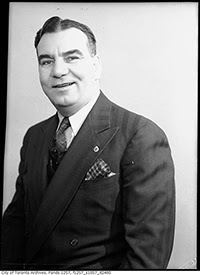
On Apr 12 1960 Milt Dunnell, in his sports column, reported that Corcoran was ailing at a Ft Lauderdale hospital. Jack - John Joseph 'Jack' Corcoran - passed away Apr 12 1965 at St Joseph's Hospital in Toronto. A sports page obit in the Star lists him as 73. It lists him as brother of Margaret, Ambrose, and Vincent. Earlier mentions of hunting trips and social events list other family members though un-clear on relation. He was a Jr. his father Jack Sr. had attended John Tunney's funeral in Jan 1940. Jack's mother had died in 1950 in Kingston and was mentioned as 'mother of many professional boxers and wrestlers.' Jack was buried at Mount Hope Cemetery as was Frank Tunney when he passed on in 1983.
Influence
 |
| Portrait previously online at City of Toronto Archives |
On Apr 12 1960 Milt Dunnell, in his sports column, reported that Corcoran was ailing at a Ft Lauderdale hospital. Jack - John Joseph 'Jack' Corcoran - passed away Apr 12 1965 at St Joseph's Hospital in Toronto. A sports page obit in the Star lists him as 73. It lists him as brother of Margaret, Ambrose, and Vincent. Earlier mentions of hunting trips and social events list other family members though un-clear on relation. He was a Jr. his father Jack Sr. had attended John Tunney's funeral in Jan 1940. Jack's mother had died in 1950 in Kingston and was mentioned as 'mother of many professional boxers and wrestlers.' Jack was buried at Mount Hope Cemetery as was Frank Tunney when he passed on in 1983.
Influence
In an interview in Frank's later days he remarked that Jack had been like a father figure to him. Easy to work for, and obviously an influence on the young Tunney who lost his own father at a young age. Frank, with ever present cigar in hand, just like Jack before him, would mirror his predecessor's easy demeanor and likewise earn the respect of the Toronto sporting community.
-AC
Items mapleleafwrestling.com collection, Toronto Star, Globe, COTA
Some info from Gary, thank you, and more reading at


